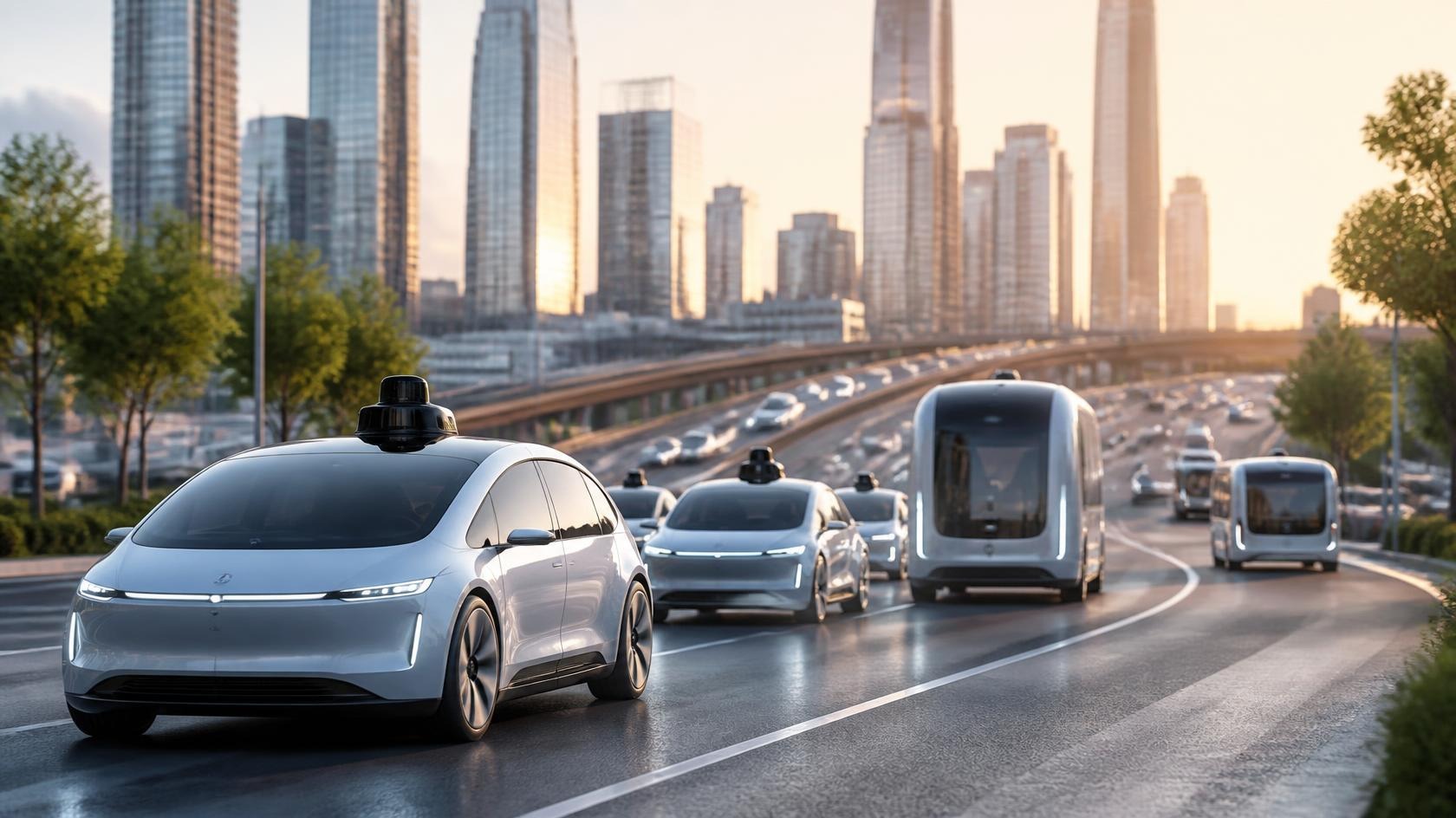
The autonomous vehicle sector has experienced a monumental shift in 2026, transitioning from heavily restricted city grids into full-scale commercial highway operations. Alphabet’s Waymo has cemented its market leadership by deploying fully driverless robotaxis onto high-speed freeways across several major American metropolitan areas, successfully mastering complex lane mergers and high-speed bottlenecks without safety drivers. The company’s expansion is backed by massive commercial momentum, with its fleet now eclipsing 250,000 paid rides per week and logging over a million autonomous ride-miles monthly. Furthermore, partnerships with major ride-hailing networks have officially launched driverless services in cities like Atlanta, with expansions to Miami and Washington D.C. imminent.
Tesla has drastically accelerated the development of its vision-only autonomous ecosystem, centering its long-term strategy around the purpose-built Cybercab. Engineering prototypes of the steering-wheel-free, two-seater vehicle are currently undergoing rigorous real-world testing on public highways in Austin, Texas and select international tracks in New Zealand to prepare for the upcoming Full Self-Driving v15 software update. To support this impending driverless network, Tesla has secured regulatory approval for a proprietary Ultra Wideband wireless inductive charging system, enabling vehicles to automatically park over automated charging pads. Additionally, the integration of new Starlink satellite telemetry hardware ensures that these vehicles maintain uninterrupted, high-speed cloud connectivity even when operating outside traditional 5G cellular boundaries.
Beyond traditional passenger vehicles, the regulatory landscape has opened up to allow completely radical, pedal-free vehicular designs onto public roads. Amazon’s Zoox achieved a historic milestone by securing federal clearance to charge public passengers for rides in its custom, steering-wheel-free carriage-style robotaxi. Concurrently, European and Asian markets are rapidly dismantling historical legal barriers to catch up with American deployments. Transport for London has formally approved driverless testing on UK streets, paving the way for AI startup Wayve to launch autonomous ride-hailing services, while regional logistics giants have begun integrating these AI pilots directly into commercial freight networks.
While the technical strides in 2026 are undeniable, they have thrust the industry into a period of intense regulatory and public scrutiny. Federal crash databases show that autonomous fleets maintain an impressive 68% lower injury-preventable crash rate compared to human drivers, yet safety advocates continue to demand universal standardization for data reporting. Incidents of software regressions in consumer-level driver-assist packages, such as erratic phantom braking, continue to fuel debates regarding the safety of camera-only systems versus sensor-fusion platforms utilizing Lidar. As autonomous vehicles blend seamlessly into everyday transit, the industry is forcing global regulators to permanently rewrite the rules of legal liability and traffic safety.